As I reflect on the life and death of Neil Armstrong, I realize that my most compelling perceptions of him as an American hero have as much to do with how he lived in the 30-plus years before and the 43 years after he became the first human being to walk on the Moon as they do with that iconic moment itself.
The image of a young boy in love with the idea of flight, open to all the possibilities and challenges of a uniquely American future in an era when life was not easy here or around the world — that is how I imagine the young Neil Armstrong.
My vision is informed by reading and research, touched by fascination with the individual and the times as they are presented in historical documents, and imbued with the personal knowledge of others who shared that phase of life at that particular time in history.
My vision is informed by reading and research, touched by fascination with the individual and the times as they are presented in historical documents, and imbued with the personal knowledge of others who shared that phase of life at that particular time in history.
Then there is the image of a man so in love with the idea of service and community and the quiet dignity of the American ideal of helping others, however and wherever we might find ourselves.
Approaching middle age as an anointed hero of epic proportion, he was presented suddenly with unprecedented opportunities of celebrity and wealth and public adulation. Given his status as a sort of super civil servant, he chose the ideal over the advantage, electing to pursue a quiet, dignified life as an instructor of others who might well further those ideals in the course of future generations.
Approaching middle age as an anointed hero of epic proportion, he was presented suddenly with unprecedented opportunities of celebrity and wealth and public adulation. Given his status as a sort of super civil servant, he chose the ideal over the advantage, electing to pursue a quiet, dignified life as an instructor of others who might well further those ideals in the course of future generations.
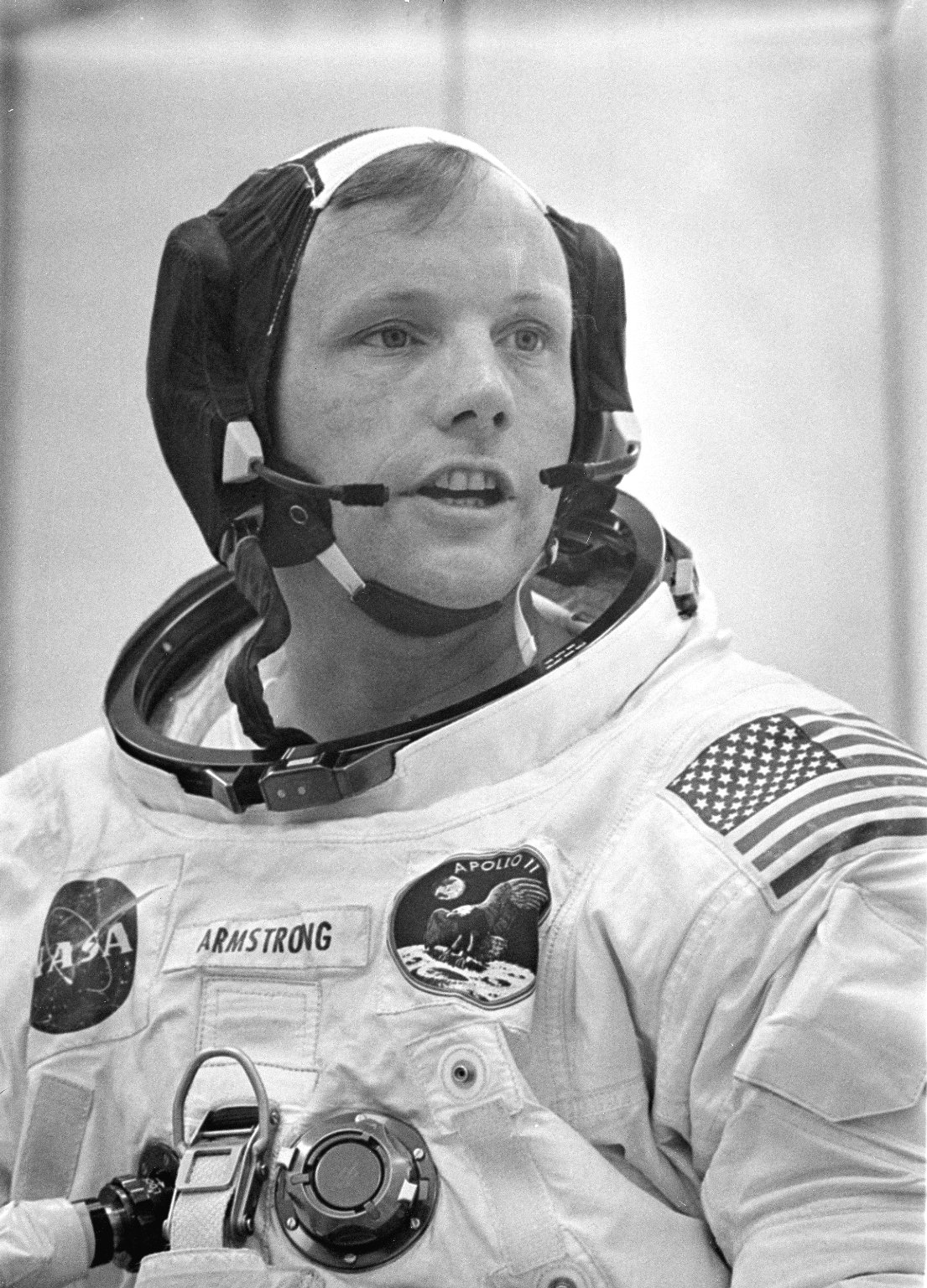 |
| Neil Armstrong during preparations for Apollo 11 in 1969.
NASA photo.
|
Through knowledge, through inference, by study and by intuition, in knowing of his deeds and hearing and seeing him speak on those rare occasions when this modest, decent man felt it appropriate to do so, I have felt privileged to embrace Neil Armstrong as a personal hero — an individual concerned with bettering the lives of others through dedication, service and the pursuit and sharing of knowledge and wisdom.
As his remarkable life now passes in its entirety into history, I hope he will be known and celebrated for all these reasons, as well as for those moments in that halcyon summer of 1969 when he landed on and walked on the surface of the Moon.
I will think of him when I look up into the night sky, knowing the significance of what he did there, and I will remember him for the ideas and ideals that marked his life before and after that extraordinary evening, while he lived out his life in the service of others here on Earth.
I will think of him when I look up into the night sky, knowing the significance of what he did there, and I will remember him for the ideas and ideals that marked his life before and after that extraordinary evening, while he lived out his life in the service of others here on Earth.
© Patrick J. Walsh
Check out these episodes of Pat’s video series “Five Minutes in Space” that celebrate important moments from the amazing life and career of Neil Armstrong:
(http://youtu.be/p5I5Bd0J5ts)
(http://youtu.be/weQEPXK6yyI)
(http://youtu.be/ICpT58HMsgc)


